Buying guide
Carbon Steel Pans Buying Guide (2026)
Carbon steel pans buying guide: seasoning, raw vs pre-seasoned vs nitrided, size, weight vs cast iron, induction, wok choice, and care that prevents rust.
Raw, pre-seasoned, seasoned, and nitrided: what you are actually buying
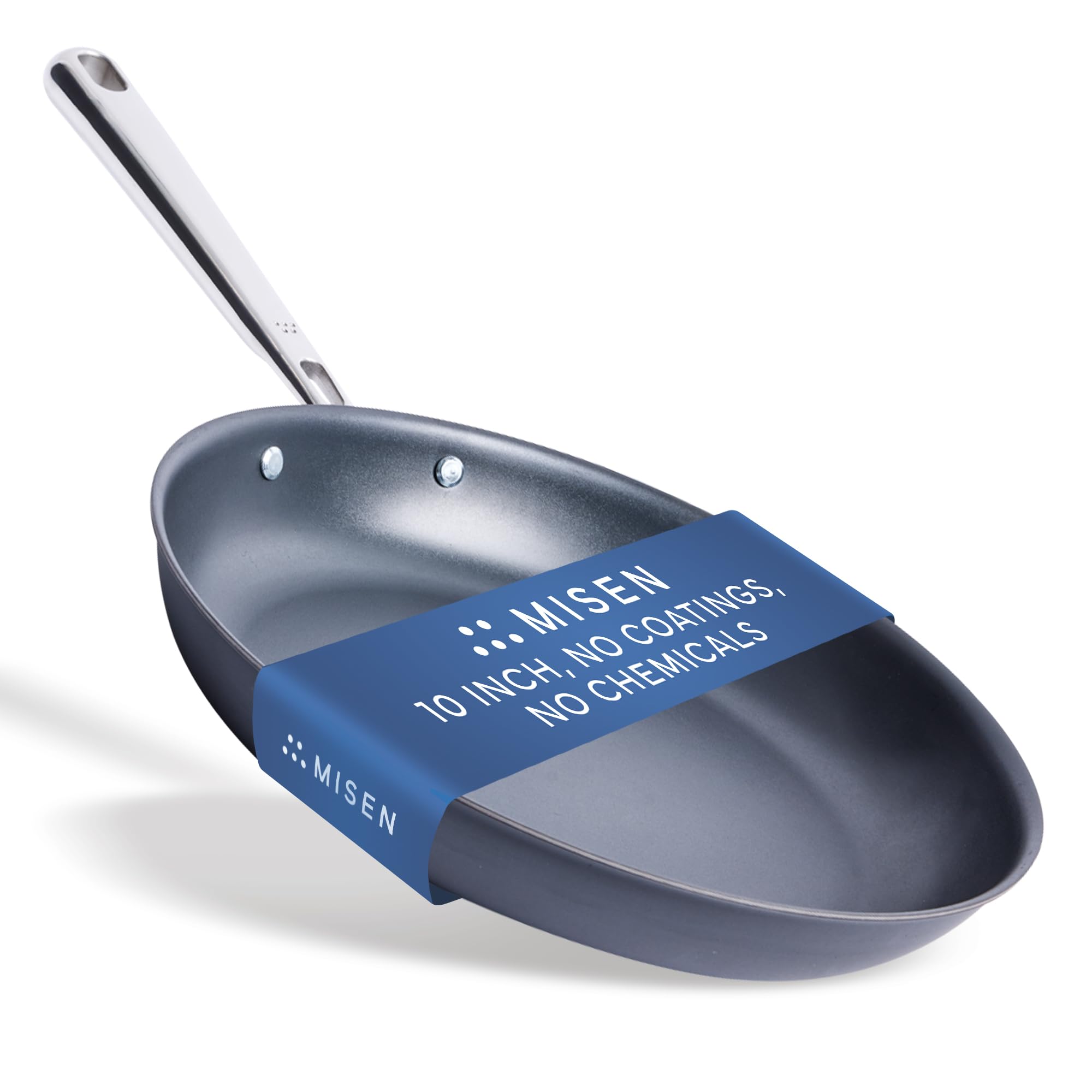
Raw or unseasoned pans, like Matfer, ship with a protective coating to wash off, then need full seasoning before eggs behave. Pre-seasoned pans, like Lodge and Merten and Storck, ship with a factory seasoning layer that helps early cooking but still needs building. Seasoned pans, like Made In, ship with a more developed seasoning that makes the first cooks easier, though maintenance continues. Nitrided pans, like Misen, use a surface treatment that resists rust better than raw steel and improves early release, but seasoning still builds with use.
No finish removes seasoning from the job. Every carbon steel pan improves with fatty foods, hand washing, and drying, and every one suffers from soaking and dishwashers. Buy the finish that matches your patience, not a promise of instant nonstick.
Size: buy for the largest meal, not the average meal
8 and 9.5 inch pans suit one or two people and egg or sauce jobs. 10 and 11 inch pans suit one to three people for daily cooking. 12 inch pans and 13.5 to 14 inch woks suit families and batch cooking. Crowding is the main cooking failure in carbon steel: food that touches steams instead of searing, however good the pan.
Measure your largest burner too. A 12 inch pan on a small burner heats unevenly, and a 14 inch wok on a small hob is unwieldy. Match pan base to burner size, then match pan size to household size.
Top picks from our research
Full ranked list

Weight: the real advantage over cast iron
Carbon steel weighs roughly half what cast iron weighs at the same size, because it is pressed from thinner steel rather than cast thick. That difference decides daily use: tossing vegetables, flipping a pancake, and lifting a loaded pan one handed are realistic in carbon steel and a workout in cast iron.
Weight still matters at large sizes. A loaded 12 inch carbon steel pan is a two hand lift, and a loaded 14 inch wok is heavier still. If wrist strain is a concern, buy smaller: an 8 or 10 inch pan used daily beats a 12 inch pan left in a cabinet.
Induction and hob compatibility
Carbon steel is magnetic, so many flat bottom pans work on induction, but do not assume it for every pan. Check the listing for your exact model: Misen, Made In, Merten and Storck, and the YOSUKATA flat bottom wok state induction compatibility. Round bottom woks need a wok ring and suit gas burners, not flat induction or glass hobs.
On glass hobs, lift rather than drag carbon steel pans, since a steel base can scratch glass. On induction, confirm the base sits flat, since a warped base loses contact and heats unevenly.
Wok or skillet: which carbon steel shape first?
Buy a skillet first if you sear, fry eggs, and cook pan sauces. Buy a wok first if you stir-fry weekly and cook noodles, rice, and vegetables in large batches. Most kitchens eventually own both, because a skillet sears better and a wok tosses better, and neither shape does the other job well.
Flat bottom woks suit home hobs of every type and sit stable without a ring. Round bottom woks suit dedicated gas wok burners and give the best wok hei, but they wobble on flat hobs and need a ring to stay put.
Seasoning and rust prevention: the daily routine
Seasoning is polymerised oil bonded to steel, built in thin layers, not in one thick coat. To season, wipe a very thin oil layer over the pan, heat until it smokes lightly, wipe again, and repeat a few times. Then cook fatty foods for the first weeks, avoid eggs and acidic sauces early, and let the surface darken with use.
Rust prevention is simpler than seasoning: hand wash with hot water, dry immediately on low heat or with a towel, and rub in a thin oil layer. Never soak, never use the dishwasher, and never leave the pan wet. A rust spot from a lapse is fixed by scrubbing with salt and oil, drying, and re-seasoning lightly.
What to buy, by cook
Best overall: Matfer Bourgeat 11 Inch, for serious searing at family size. Best French classic: de Buyer MINERAL B 9.5 Inch, for couples and omelettes. Best everyday: Misen 10 Inch, for forgiving nitrided steel and induction use. Best premium: Made In 12 Inch, for seasoned large pan cooking. Best budget: Lodge 12 Inch, for family size at the lowest price. Best wok: YOSUKATA 13.5 Inch Flat Bottom, for stable home stir-frying. Best set: Made In 10 and 12 Inch Pair, for a complete two pan kitchen.
Avoid buying a large premium pan as a first pan if you cook for one or two people, and avoid buying a tiny pan for a family. Size first, finish second, brand third: that order prevents nearly every carbon steel regret.
FAQ
Questions, answered straight
How long does it take to season a carbon steel pan?
Initial seasoning takes an afternoon of thin oil layers, but real seasoning takes about a month of regular cooking. Fatty foods build it fastest, eggs test it earliest, and acidic foods strip it, so plan the first month around bacon, sausages, fried chicken, and roasted vegetables.
Can I use metal utensils in carbon steel?
Yes. Carbon steel has no coating to scratch, so metal spatulas and tongs are fine and actually help smooth the seasoning over time. Avoid only harsh abrasives that strip seasoning, and never use oven cleaner or a dishwasher on a seasoned pan.
Why does food stick to my new carbon steel pan?
Because seasoning is not built yet, or the pan was too cold, too hot, or too dry. Preheat on medium, add oil, wait for it to shimmer, then add dry food and leave it alone until a crust forms. Sticking in week one is normal; sticking in month three means the seasoning needs rebuilding with fatty foods.
Is carbon steel safe for cooking?
Yes, with normal care. Carbon steel is iron and a small amount of carbon, with a seasoning layer of polymerised oil. It is uncoated, so there is no nonstick coating to degrade, and the main care notes are rust prevention and avoiding long acidic simmers in a new pan.